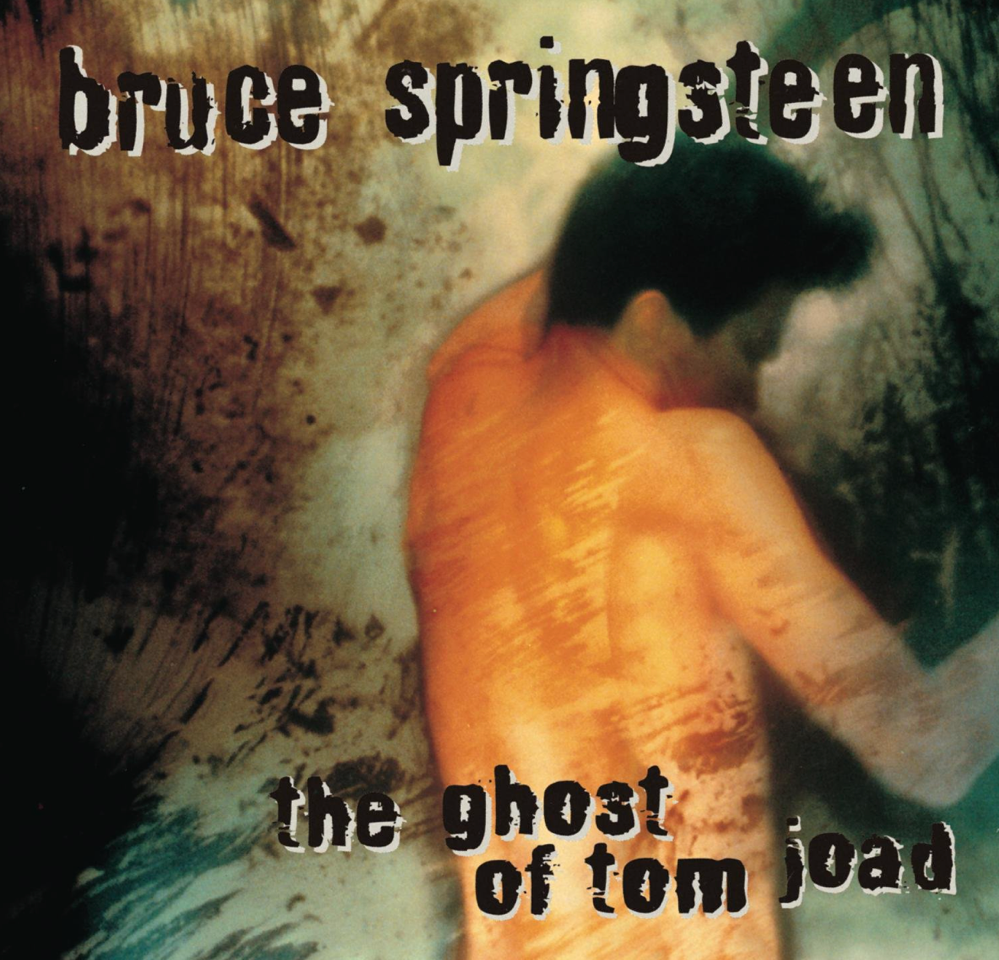
Bruce Springsteen - The Ghost of Tom Joad
Listen to an audio version of this review by Greg
“I didn’t want to be rich. I didn’t want to be famous. I just wanted to be great”.
These are the words of Bruce Springsteen during a documentary portraying the relationship between music producer and Mogul, Jimmy Iovine, and rapper Dr. Dre. Jimmy Iovine was being interviewed about entrepreneurship and his relationship with Dr. Dre. He notes that it was working with Bruce Springsteen where he learned all about work ethic.
“Put it all on the line. Be unapologetic. Don’t be a jerk but make sure you know you can’t always worry about what other people think. If you have a goal, if you have a dream, you need to work at it. Music is hard and success is not just going to come your way by getting lucky. Anyone who believes that are kidding themselves”.
-Bruce Springsteen
On a late December morning in 1984, my family packed the car to prepare for what would yet be another trip up north. It was our annual pilgrimage to the beautiful Green Mountains of Vermont.
At age 3, my parents put me on skis as I grew up the ranks at beautiful Magic Mountain in Londonderry, Vermont. In addition to the views, the cold, the snot running down my nose, the long chairlift rides, the jumps, the tree trails and the fireplace in the lodge after a long day, some of my fondest memories of Vermont are the trips up north from Massachusetts. During these trips, I remember the music I would listen to on my old Panasonic Boom Box and later, my Sony Walkman.
It was Christmas of 1984. I was gifted what was known back then as a boom box. For those of you reading or listening to this now, they don’t make boom boxes anymore. At least, I don’t think they do? But in the 1980s, they were everywhere. Yes, there were stereo systems, but electronic retail stores started to sell these box-shaped music listening devices, many times with a handle at the top, a right and left speaker, and a cassette deck in the middle.
Of course, being gifted a boom box, I had to have cassettes to listen at home and on those wonderful drives up through the backcountry roads of western Massachusetts and southern Vermont.
It just so happened that I was gifted Bruce Springsteen’s most recent album Born in the USA during that Christmas. For many people living in the early to mid 1980s in 1984, with exception of Michael Jackson’s, Thriller it was hard to find an album bigger than Bruce’s Born in the USA.
But this review is not about Born in the USA. However, I feel it’s important to mention this record because it was what started my “on again - off again” journey with Bruce Springsteen and his E-Street band.
Born in the USA was an album that was filled with hits. In addition to the title track, there were several top 10 songs on that record that were pasted all over MTV and the radio throughout the 80s and even up through today. Although I can remember becoming a musician in 1989 and growing apart from Bruce. I’m not sure why. However, the reason I write this review today is because I’m happy that I have come back. I’m happy that I’ve come back to Bruce’s music. I’m happy that quite frankly I’m not only in love with Bruce’s music, but I’m in love with the idea of the person that Bruce I truly believe has become.
The album that made me open my eyes back to Bruce Springsteen was an album that I feel many diehard fans rarely talk about that album is 1995’s, The Ghost of Tom Joad.
The Ghost of Tom Joad is Springsteen’s eleventh studio album. It was recorded between March and September 1995 and released on November 21, 1995, by Columbia Records. This was only Bruce’s second mostly acoustic album after 1982’s Nebraska. Interestingly enough, it was his first studio album to fail to reach the top ten in the US in over two decades, and this is reason number 700 why I love it so much.
The album, consisting of twelve songs, are supported by Bruce’s acoustic guitar. The lyrics are a melancholic contemplation of life in Mexico and the U.S in the mid 1990s.
With songs like Straight Time, Highway 29, and Sinaloa Cowboys, you can picture the characters Bruce writes and sings about.
“Got out of Prison back in ’86 and I found a wife. Walked the clean and narrow”.
“Come home in the evening, can’t get the smell from my hands. Lay my head down on the pillow and go drifting off into the foreign lands”…
The character of Tom Joad was introduced to American culture in 1939 when John Steinbeck wrote and published, The Grapes of Wrath. A book based on the Great Depression, it later inspired a film with the same name, starring Henry Fonda which motivated famed singer Woody Guthrie to write, “The Ballad of Tom Joad”.
Although Bruce’s stories are fictional on this record, they share a strong resemblance, or influence, from his blue-collar days growing up in New Jersey.
You see, by the 1990s, I grew tired of Bruce’s “blue collar, I work hard with my hands and I wear blue jeans and support the little guy” image. I never disrespected it, but I just became burned out by this message.
But, man was I naïve, and perhaps a bit ignorant. Bruce grew up in Freehold, NJ in the 1950s and early 1960s in a house with no heat, no phone, with a father who was an alcoholic and had a strong manic-depressive personality. Bruce tells stories, many stories, of being sent by his mother into the local pub on some nights in the late 1950s to “fetch” his dad. She figured that seeing a 9-year-old Bruce asking him to come home, would influence her troubled husband to put the bottle down and leave the bar.
Bruce also shares stories in his autobiography, Born to Run, of literally not having $60 to pay rent. Bruce tells another story of being evicted from his NJ apartment, being forced for many nights to sleep on a friend’s couch. Oh and by the way, this happened after he had secured his first record deal, but he had yet to hit big.
The point I’m making here is Bruce’s image is not just his image; it is his real life. Many of his songs are based on real life experiences.
In early 1995, Bruce began to think about writing the stories for The Ghost of Tom Joad while living in California, his “home away from home” he used to say. The topic he wanted to capture stemmed from a decade long debate he was having in his head. Since the success of Born in the USA, he had been pondering, “where does a rich man belong in this world”? Bruce wanted to address his status change in the world but also ask the question, “during our short time on this planet, what is the work we should truly accomplish”?
Like the Nebraska album, Bruce began writing and recording on his small home equipment and devices. The song, The Ghost of Tom Joad was the first song he cut, which gave him the feeling for the rest of the record. Bruce wanted to base the stories on people in California in the mid 1990s. By then, America could feel the effects of the increasing economic division between the 1980s and 90s. Bruce’s intention in the title track was to write about people whose labor and sacrifice created America.
In Bruce’s book, Born to Run, I wanted to paraphrase something he writes about this song:
We are a nation of immigrants. No one knows whose coming across our borders each day. Here in the new century (post year 2000), we are once again at war with our New Americans. As these people come, they will suffer hardship and prejudice, but like the immigrants who built this country, they will prove resilient and victorious.
In the mid 1990s, outside of the booming music industry, you could feel a new America forming. Bruce sings about the challenges immigrants face when arriving. It was no more the land of promise and the free, at least for them. Immigrants would now have to fight to survive.
Different from his previous albums, Bruce wanted to make his melodies uncomplicated. He writes about people who traveled light, who were transient and people who left behind hard, complicated lives in another country.
Bruce wanted his voice to disappear into the characters he wrote about, which was another goal I found very admirable. He wanted the listeners to feel their story rather than Bruce’s.
The album was also written as an honor to their experiences. Bruce wanted to do research, and I’m not talking about the “research” we mention today which essentially just means, Googling something. To get the details correct, he wanted to not only research the central valley of California but go and spend time there. The central valley is the 400-mile, 20,000-acre heartland of California which produces half of the nuts, fruits and vegetables in the United States.
Bruce had been through the central valley of California many times. He thought long and hard about who the people that lived and worked there were. Bruce thought about the many times the people faced choices that could have influenced them to take the easy way or the hard way, essentially the right way.
Song such as Across the Border, The Line, Sinaloa Cowboys and Balboa Park are songs Bruce wrote about the Mexican migrant experience in the new west.
I can remember the night I heard this album for the first time; it was Christmas break December 1995. I was home from college, and a close friend handed me the album. I was floored. For this was only the second Bruce album after 1984’s Born in the USA I would own, and this time, as a now 18-year-old adult, truly covet. I can remember listening to each song and really feeling the story. I felt the person’s struggles Bruce sang about, and for the first time in my life, really appreciated the safe, secure, town I had come from in eastern Massachusetts. At 18, I finally appreciated my position in life and swore I would never take it for granted again. Before this experience, I feel I took this for granted every single day.
Songs such as Youngstown and New Timer were inspired by Mary Jane Auch’s fiction novel, “Journey to Nowhere”. In these songs, Bruce wanted to chronicle the effects of post industrialization and the weight of lost jobs. There was a large disappearance of manufacturing jobs which led to the unfortunate demise of the citizens who built a hard-working America.
In Bruce’s novel, Born to Run, he noted how he saw this same deterioration firsthand in his hometown of Freehold, NJ. The jobs were just GONE. Rather than negotiate with the unions, most manufacturing plants closed and searched for cheaper labor.
For the song, Galveston Bay, Bruce began writing the song by asking the question, “is the most political act an individual one”? Bruce wanted to write about the bold move the character in this song makes. His character was influenced to do the wrong thing but chooses not to. He distinctly refuses to add to the violence around him.
Bruce knew The Ghost of Tom Joad would not attract his largest audience, but like Nebraska, he was very proud of it. He felt it represented what it stood for, a view from a different perspective. A perspective many folks in the United States have sadly forgotten exists or don’t care about.
The album was released on November 21st, 1995, which also happened to be the night Bruce performed his first full solo acoustic concert since the early 1970s. In a solo show, there’s just one man, one guitar and the audience.
As Bruce later writes in his book,
“What’s drawn forth is the emotional nucleus of your song. If your song is written well, it will stand in its skeleton form. Unlike Born in the USA, this album was naked”.
By the end of the night, Bruce realized he had developed a new style of playing guitar. He used his hands not only to strum and press on the frets, but for bass and for rhythm. He also realized how powerful pauses were, and he used the full power of his voice to take over the song. Many of his characters throughout the songs in The Ghost of Tom Joad were isolated men, and Bruce felt the audience needed to hear their suffering, including when he lay silent.
The songwriting style Bruce adopted while writing this album would carry forward into his songwriting for every subsequent album. It gave Bruce a newly found love for songwriting he never knew he had. It no longer seemed like the chore it had so sadly become, but a new adventure and a new challenge.
I, for one am a changed musician, now that I’ve read Bruce Springsteen’s novel. I am also a changed person for hearing the heart and soul of the people Bruce writes about in The Ghost of Tom Joad. Thirty-one years later, the album’s subject matter still resonates in a world where people are being stopped on the street by our government, just because they look different or sound different than a white person. Citizen or not, this moment in time is not about opening borders and just letting everyone in. It’s about being different. Being different from every other country that persecuted and discriminated. It’s about harnessing the welcoming that was brought to our ancestors, your great grandparents and great, great grandparents. For if they didn’t make their move and leave a nation that offered nothing more than poverty, hunger and violence, I would not be writing this and you would not be reading this.